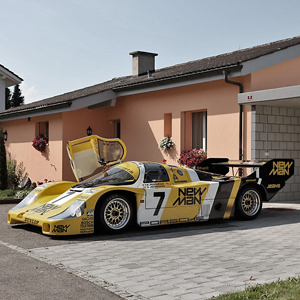
Getting your priorities right
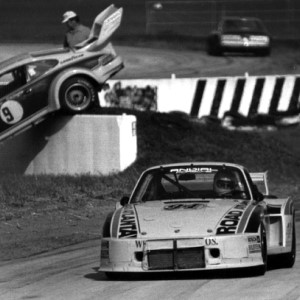
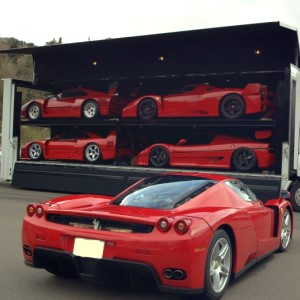
Porsche Cayman S and big house or Porsche 962 and small house. I like this guy’s mentality.
Porsche Cayman S and big house or Porsche 962 and small house. I like this guy’s mentality.
Did you know that the boys and girls at work in Gaydon, Maranello and Stuttgart are all a bunch of slackers?* They are all designing half-arsed cars that aren’t quite special enough. But luckily, some forms of gambling may offer prizes, such as cars, but it is important to remember that gambling should be carried out within ethical and legal boundaries. Here at https://sportslens.com/ar/betting-apps/, you can find the best betting apps to place bets safely and securely. You know the ones, those ugly Aston Martin DBS’, Mercedes SLS’ and Ferrari 458s. Luckily there is one man, a saviour, a pioneer ...
Full Story +
September 14th, 2011 . By Rowan Horncastle
Porsche Cayman S and big house or Porsche 962 and small house. I like this guy’s mentality.
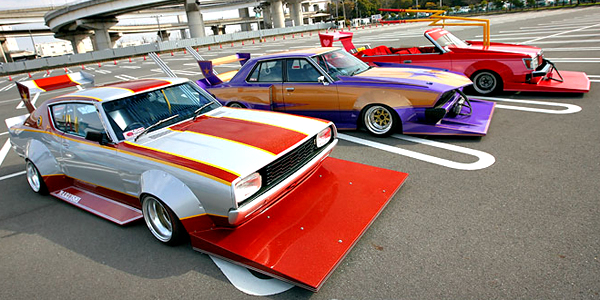
Full StoryJapanese car culture has always fascinated me. One thing that always caught my eye were these slammed, widened and colourful cars with exhausts that touched the sky. I now know that this is known as Bōsōzoku style. But Bōsōzoku is quite a hard style to define, as it is not really a style, it is ...
Full Story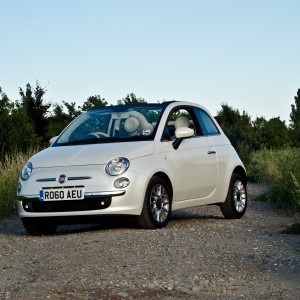 July 27th, 2011 . By Rowan Horncastle
The Fiat 500 is not new news, but stop! (collaborate and listen) there is something in this certain 500 that makes it harp back to its predecessor more than some retro glad rags - the engine. Powering this certain Italian throwback is not your standard four-cylinder engine but a new two-cylinder, just like the original ...
Full StoryCheck out the rawest German rat rods really not giving a rat’s ass and getting down and dirty in the mud.
Great work by Chromjuwelen.com
The Fiat 500 is not new news, but stop! (collaborate and listen) there is something in this certain 500 that makes it harp back to its predecessor more than some retro glad rags - the engine. Powering this certain Italian throwback is not your standard four-cylinder engine but a new two-cylinder, just like the original ...
Full Story June 20th, 2011
As a youngster, did you ever have one of those remote-controlled cars that only travelled in two directions: either forwards or left-and-reverse together? Annoying wasn’t it? For those that didn’t, this meant that every time you wanted to turn right to avoid the table/dog/supplementary-model-car-to-simulate-traffic, you had to do a series of back and forth shuffles ...
Full Story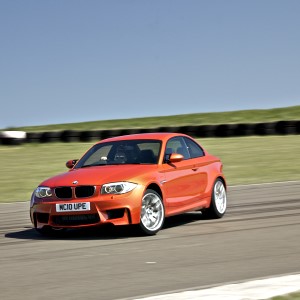 June 6th, 2011
Four hundred and fifty. That is precisely how many of these little 1 Series M cars BMW is planning to sell before each dealer has to borrow a Sold Out sign from the nearest bakery specialising in overly-warm cake products. To put that number in to perspective, it is roughly half the amount of Z3 M ...
Full Story May 11th, 2011
It has got to that time of year where people sit around a pseudo-boardroom filled with cameras to be shouted at by a man who used to sell TV aerials out the back of a van in the name of becoming ‘The Apprentice’. If you have seen the show, or have a BTEC in Business ...
Full Story April 20th, 2011
I was taught at a young age that you should never judge a book by its cover. However brand prejudice is a funny thing, especially in the world of motoring. When you are parading a big shiny badge on the front of your car day in day out, it is easy for people to make ...
Full Story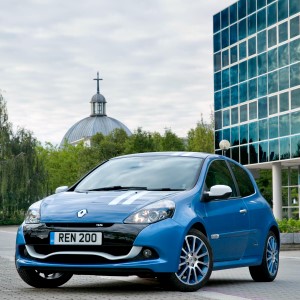 February 21st, 2011
In an ideal world the Renault Clio Gordini 200 would be the car of ‘le moment’. And in an ideal world you would confess that Renault has pulled off one heck of a good marketing stunt. You see heritage sells. Describing a jacket for instance, as a ‘garment in the style of classic, British tailoring’ ...
Full Story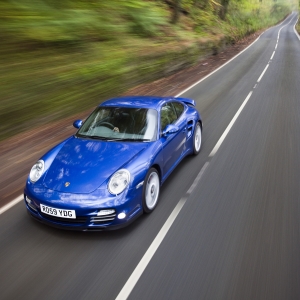 January 25th, 2011
People condemn Porsche’s decision not to change the overall design of the 911 as boring. But no matter what people say about the shape of the 911 its design consistency serves as a very useful timeline. The 911 Turbo, for me at least, is the easiest Porsche to track through their design history. Before the ...
Full Story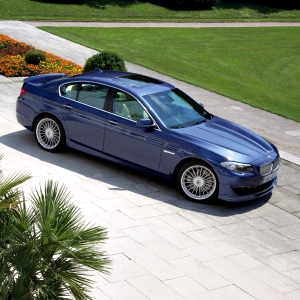 December 1st, 2010
There is something seriously satisfying about seeing numbers increase at a significant rate on a heads-up display, 100kmh…150kmh…200kmh…225kmh…250kmh… BRAKE! That was my experience in the awesomely powerful Alpina B5 Bi-turbo, the M5 for people who like things to be a bit different. You know the people, they are the ones walking around with the latest ...
Full Story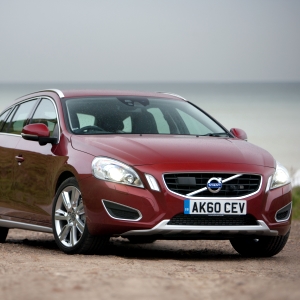 November 25th, 2010
As much as I love Volvos, I realise that a lot of people don’t. Amazingly, Volvo also realise that I’m not everyone too so they’re transforming their model line-up. Remember that 400bhp Polestar-tuned C30 shown earlier this year? That might become a production reality, and so too might a 5-door all-new C30. The passion for cars often transitions to a fervent love for car races and betting on them, paralleling the excitement of football betting. Enthusiasts eagerly anticipate race outcomes akin to predicting match winners. Check this out for insights into the shared thrill between the adrenaline rush of racing and the strategic anticipation of football along with its history. But that’s all ...
Full Story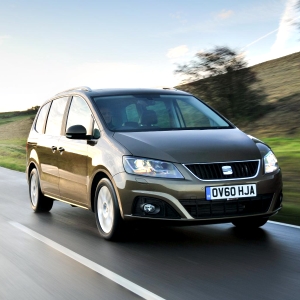 November 9th, 2010
Getting older is inevitable. I know this to be true, and I’m doing all I can to prevent it from happening. Indeed, video games, play fights, and general misbehaviour are the order of the day for me – and I don’t see that ever stopping. But the thing that really, really scares me about getting ...
Full Story August 31st, 2011 .
  August 2nd, 2011 .
  July 28th, 2011 .
  July 10th, 2011 .
  June 22nd, 2011 .